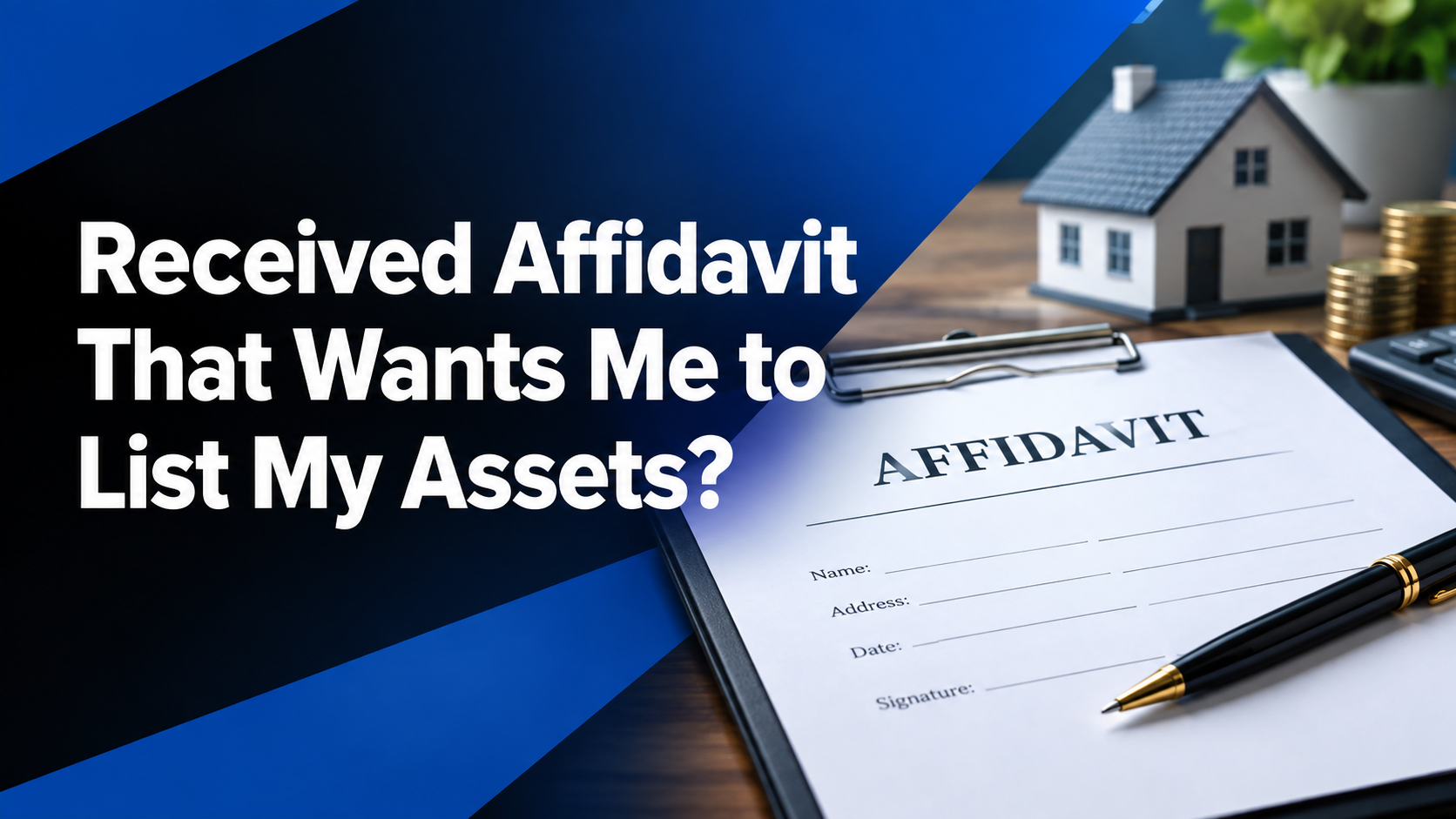
You just got a letter or form from the other side’s attorney after a car accident. It asks for a detailed list of your bank accounts, real estate, investments, income, and other property. Your stomach drops. Suddenly the crash feels less like an insurance matter and more like a personal financial threat.
This happens more often than most drivers realize. When injuries look serious and insurance policy limits may not cover the full claim, a plaintiff attorney request for a personal financial affidavit or asset disclosure form becomes a common next step. The goal of this article is simple: give you clear answers about why you received the affidavit that wants you to list your assets, whether you must fill it out, and the practical steps that protect your savings, home, and future earnings.
You are not alone in feeling blindsided. Many people in the same situation make rushed decisions. The good news is that you still have options and leverage if you act carefully.
Why Plaintiff Attorneys Send Asset Disclosure Requests
After a crash involving bodily injury liability, the injured person’s lawyer evaluates the full picture. Your auto insurance provides the first layer of protection. When medical bills, lost wages, and pain and suffering start climbing past those limits, the attorney looks for more.
An asset disclosure form or personal financial affidavit lets them see whether you have reachable property. If the form shows mostly protected or modest assets, the lawyer is more likely to recommend accepting the insurance policy limits and closing the claim. If it reveals substantial non-exempt wealth, the attorney may push for a lawsuit seeking an excess judgment against you personally.
Think of it as a cost-benefit calculation for the other side. Litigation is expensive and time-consuming. Going after someone who appears “collection-proof” rarely makes sense. Going after someone with visible equity, brokerage accounts, or high income can look worthwhile.
Your own insurance company sometimes forwards these requests. Carriers want the claim resolved efficiently. They may encourage cooperation because a clean settlement within limits protects both you and them. Still, the request itself usually comes from the opposing attorney, not from a court order.
Are You Legally Required to Complete the Affidavit?
In most states, the short answer is no, at least before a lawsuit is filed and a judgment is entered.
No general statute forces an at-fault driver to volunteer a full list of personal assets simply because the other side asks. California law, for example, focuses on proof of financial responsibility through insurance, not disclosure of private wealth. Florida law similarly treats pre-suit financial affidavits as voluntary. Courts do not compel this information until after a judgment exists and collection efforts begin.
That does not mean refusal is risk-free. The other side can refuse to settle for the policy limits unless they receive the information. They may file suit anyway. Once a case is in court and a judgment is entered against you, formal discovery tools become available and refusal is no longer an option.
The practical question is rarely “Can they force me right now?” It is “What outcome helps me most?”
When Completing the Form Can Help
If your assets are largely protected by law, completing a truthful personal financial affidavit can speed settlement. Homestead protections, retirement accounts, and certain joint ownership structures often make collection difficult. Showing that reality encourages the other side to take the insurance money and walk away.
When Holding Back Makes Sense
If you own significant non-exempt assets such as investment accounts in your name alone, rental properties, or high cash balances, disclosing them early hands the opposing attorney a roadmap. In those cases, many defense lawyers advise against voluntary disclosure until required by court process.
Every situation is unique. The right move depends on your specific balance sheet, state exemptions, and the size of the claim.
What the Affidavit Usually Asks For
These forms vary by law firm, but most request the same categories:
- Current employment and income sources
- Bank and investment accounts
- Real estate ownership and equity
- Vehicles, boats, or other titled property
- Retirement accounts and pensions
- Business interests
- Recent transfers of property
- Debts and liabilities
- Other insurance coverage, including any umbrella insurance coverage
Some versions also request Social Security numbers or ask about spouses. Because the document is usually signed under oath, accuracy matters. False statements can create separate legal problems later.
Step-by-Step Actions to Take Right Now
Do not ignore the request. Do not fill it out immediately either. Follow a deliberate sequence.
Contact Your Insurance Company and Confirm Defense Counsel
Notify your carrier that you received the asset disclosure form. Ask whether they have assigned defense counsel. Your policy generally requires the insurer to defend you against covered claims. That attorney’s job is to protect your interests within the scope of the policy.
Request written confirmation of your bodily injury liability limits and any excess or umbrella layers.
Hire Independent Counsel If the Stakes Are High
When the claimed damages clearly exceed policy limits, or when you have meaningful personal assets, retain your own lawyer. Insurance-appointed counsel primarily serves the carrier’s interests. An independent attorney focused on personal asset protection can evaluate your exposure and advise on the affidavit specifically.
Inventory Your Assets Privately First
Before responding to anyone, create a private list of everything you own and how it is titled. Note which items qualify for state or federal exemptions. Common protected categories include:
- Primary residence under homestead laws (strong in states such as Florida and Texas)
- Employer-sponsored retirement plans protected by federal ERISA rules
- Certain IRAs under state statutes
- Life insurance cash values and annuities in many jurisdictions
- Wages of a head of household in some states
Non-exempt assets typically include individual brokerage accounts, investment real estate, and cash beyond modest exemption amounts.
Review Any Existing Umbrella Policy
Umbrella insurance coverage sits above your auto limits and can absorb large excess judgment exposure. Confirm the limit and whether the carrier has been notified. If you lack an umbrella, it is too late for this claim, but the experience often prompts people to add one afterward.
Decide on Disclosure Strategy With Counsel
Your lawyer can help you weigh the trade-offs. Options often include:
- Providing a complete, accurate affidavit that demonstrates limited collectible assets
- Offering limited information focused only on insurance
- Declining to respond until a formal lawsuit and discovery demand arrive
- Negotiating a settlement that includes a full release without the affidavit
Never transfer, sell, or retitle assets after the accident in an attempt to hide them. Courts view post-accident transfers with suspicion and can reverse them as fraudulent conveyances.
Document Everything
Keep copies of the request, your insurance correspondence, and any advice received. If you later need to show that you acted reasonably, this paper trail helps.
How Insurance Policy Limits and Excess Judgments Interact
Your auto policy’s bodily injury liability coverage is the first line of defense. Typical limits might be $25,000/$50,000, $100,000/$300,000, or higher. When medical costs and other damages exceed those numbers, the injured party can seek an excess judgment.
An excess judgment is a court award larger than the available insurance. Once entered, the plaintiff can attempt to collect from your non-exempt personal property and, in many states, a portion of future wages.
This is exactly why the plaintiff attorney request for financial information appears. The lawyer wants to know whether pursuing that excess is realistic. Strong personal asset protection and adequate umbrella insurance coverage change the calculation in your favor.
Insurers also face potential bad-faith exposure if they unreasonably refuse a reasonable settlement demand within policy limits. That dynamic sometimes pressures carriers to tender limits even when the other side demands an affidavit.
Common Pitfalls to Avoid
Several mistakes turn a manageable claim into lasting financial damage.
Signing the affidavit without reviewing it with counsel is the most frequent error. Once sworn, the statements can be used against you.
Discussing your net worth or insurance limits casually with the other driver, adjusters, or investigators can create problems. Stick to facts about the accident itself.
Assuming your insurance will automatically cover everything above the limits is dangerous. Policies have ceilings. Anything beyond them falls to you unless an umbrella applies.
Delaying action while hoping the request disappears rarely works. Deadlines on settlement offers can expire, and lawsuits have statutes of limitations.
Finally, treating the form as optional paperwork instead of a strategic decision underestimates its impact on the entire claim.
Real-World Considerations Across States
While the core principles remain consistent, state rules on exemptions differ. Florida and Texas offer robust homestead protection with no dollar cap on the primary residence in many cases. California provides a substantial but capped homestead amount that adjusts with housing costs. Other states offer more limited shelter.
Retirement accounts receive strong federal protection when they are ERISA-qualified. IRAs depend more on state law. Wage garnishment rules also vary, with federal caps and state head-of-household exemptions adding layers of defense.
Because of these differences, generic online advice is never a substitute for counsel licensed in your state who can review your actual holdings.
Building Better Protection Going Forward
The best time to strengthen personal asset protection is before any accident occurs. Adequate auto liability limits combined with a solid umbrella policy form the foundation. Titling assets carefully, maximizing retirement contributions, and understanding your state’s exemptions create additional buffers.
After an incident, the window for new planning narrows. Focus instead on accurate evaluation of what already exists and careful handling of the pending claim.
Conclusion
Receiving an affidavit that wants you to list my assets after a car accident feels invasive and alarming. In most cases, you are not legally required to complete it before a lawsuit and judgment. The decision should rest on a clear-eyed assessment of your insurance coverage, your protected versus reachable assets, and the size of the claim.
Act promptly but deliberately. Speak with your insurer, consider independent counsel focused on car accident liability claim defense and asset protection, inventory your situation privately, and choose a response strategy that minimizes long-term risk. With the right steps, many people resolve these claims within policy limits and move forward without lasting damage to their personal finances.
Consult a qualified attorney in your state as soon as possible to evaluate your specific circumstances and protect your rights.
Frequently Asked Questions
What happens if I received affidavit that wants me to list my assets?
The opposing attorney is assessing whether you have non-exempt property that could support an excess judgment beyond your insurance. You generally do not have to complete it pre-suit, but refusing may delay or prevent a policy-limits settlement.
Do I have to fill out an affidavit listing my assets after a car accident?
Usually no, before a lawsuit is filed and a judgment entered. The request is voluntary in most jurisdictions. After judgment, formal collection tools can compel disclosure.
Insurance company sent me an asset affidavit after an accident. Should I sign it?
Not without legal advice. Your carrier may encourage it to close the claim, but an independent review of your assets and state exemptions is essential first.
Should I sign an asset disclosure affidavit for an insurance company?
Only after understanding the strategic impact. If your assets are mostly protected, disclosure can encourage settlement. If you have significant collectible property, disclosure can increase the chance of personal pursuit.
What happens if I refuse to complete an asset disclosure form?
Nothing automatic occurs in most pre-suit situations. The other side may simply decide whether to accept the available insurance or file suit without the information.
Can an insurance lawyer force me to list my personal assets?
An opposing attorney cannot force pre-suit disclosure in the absence of a court order. Once a judgment exists, the landscape changes and collection discovery becomes available.
How does umbrella insurance coverage help with these situations?
An umbrella policy provides additional liability limits above your auto coverage, reducing the chance that an excess judgment will reach your personal assets.
You May Also Like: Does Your Witness Need an Affidavit? Legal Rules Explained