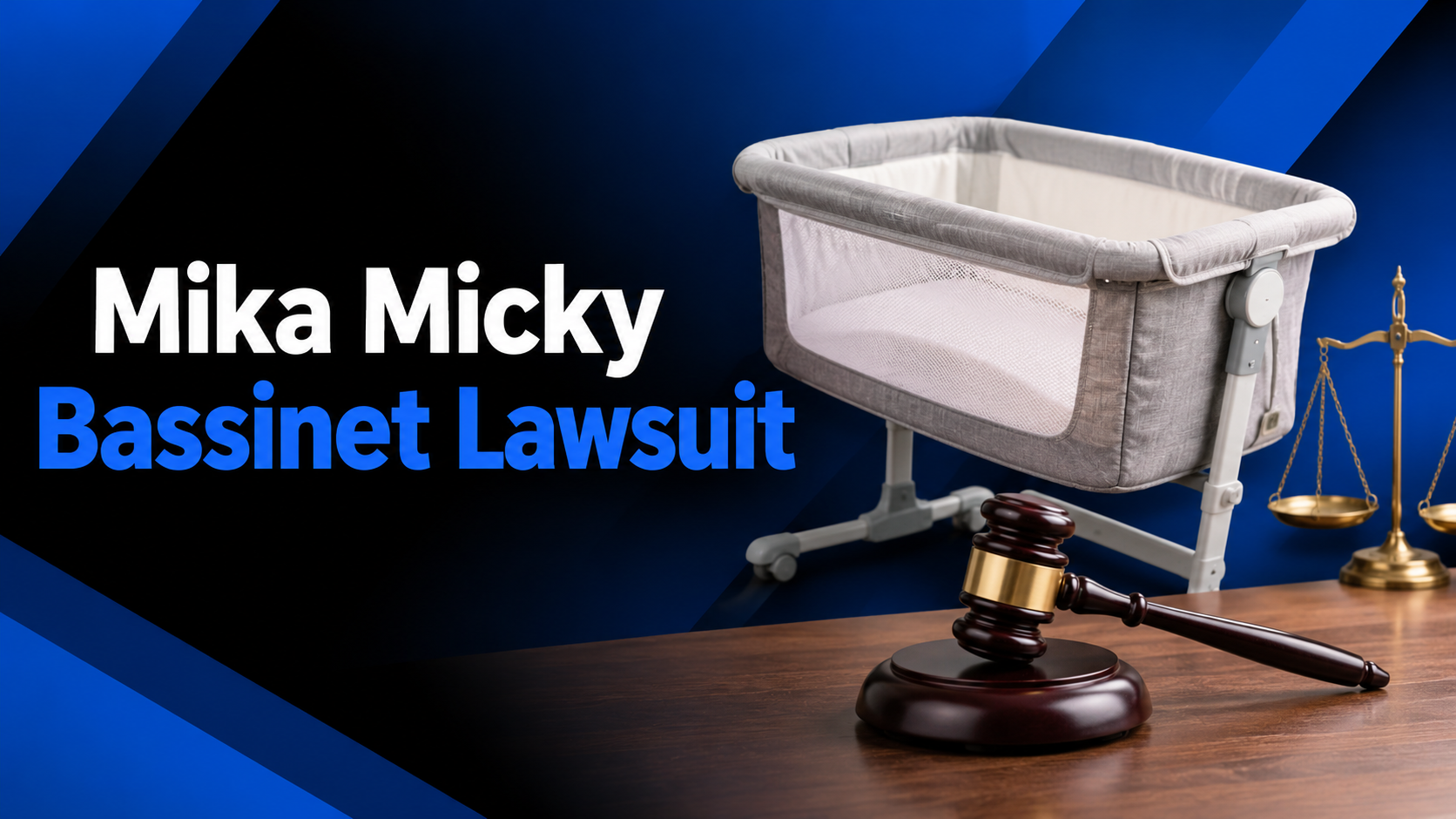
Parents trust infant sleep products to keep their babies safe during vulnerable early months. When that trust is shaken by a reported tragedy, families often search for answers about product risks, regulatory standards, and legal options. This guide examines the Mika Micky Bedside Bassinet Lawsuit, related safety concerns with infant sleep products, and steps consumers can take to protect their rights and their children.
The article draws on publicly available court filings, Consumer Product Safety Commission (CPSC) rules, and American Academy of Pediatrics (AAP) guidelines. Allegations in any lawsuit remain unproven until resolved by a court or settlement. Always consult a qualified attorney for advice specific to your situation.
Understanding the Mika Micky Bedside Bassinet Lawsuit
In late 2025, Minnesota father David Sullivan filed a wrongful death lawsuit as trustee for the next of kin of his daughter, Summer Sullivan. The case names Amazon.com Inc. and Redline Commerce Inc., which does business as Mika Micky. It was removed to the U.S. District Court for the District of Minnesota in January 2026.
According to the complaint, on February 16, 2023, five-month-old Summer was placed for a nap in a Mika Micky bedside bassinet at the family’s home in Shoreview, Minnesota. She was later found unresponsive with her face pressed against the side of the bassinet. Emergency responders transported her to Children’s Minnesota–St. Paul. She never regained consciousness and died from asphyxia complications caused by airway occlusion.
The lawsuit alleges the bassinet was defectively designed and unreasonably dangerous for infant sleep. It claims portions of the sides were insufficiently firm and created areas where an infant’s face could press against surfaces that restrict airflow. Sullivan asserts that Redline knew or should have known of the risks and that Amazon sold and distributed the product without adequately ensuring it met safety standards for infant sleep.
Claims include strict product liability, design defect, failure to warn, negligence, and breach of express and implied warranties. The complaint seeks damages exceeding $50,000, plus interest, costs, and other relief under Minnesota law, covering medical expenses, funeral costs, pain and suffering, and loss of companionship.
In June 2026, a federal judge denied without prejudice a motion for default judgment against Redline after it failed to appear. The court noted that entering judgment against one defendant while Amazon continues to defend the case could produce inconsistent results. The case remains active as of the latest available updates.
This is one reported lawsuit. No widespread formal CPSC recall of Mika Micky bassinets appears in official records at the time of writing. Product liability claims often arise from individual incidents even without a broad recall.
Safety Risks Linked to Infant Sleep Products
Infant suffocation risks remain a leading concern in sleep-related infant deaths. The AAP emphasizes that babies should sleep alone, on their backs, on a firm, flat surface free of soft bedding, pillows, or toys. Room-sharing (baby in the same room but on a separate surface) for at least the first six months can reduce the risk of sudden infant death syndrome (SIDS) by as much as 50 percent compared with solitary sleeping.
Bedside sleepers, also called co-sleepers or bedside bassinets, are designed to attach to an adult bed so parents can reach their infant easily while keeping a separate sleep surface. When properly designed and used, they can support safe room-sharing. Problems arise if the product tilts, creates gaps with the adult mattress, has soft or non-breathable side panels, or fails to meet firmness and height standards.
Public discussions of the Mika Micky product have noted mesh sides intended for breathability alongside fabric sections near the frame. Allegations in the lawsuit focus on areas where an infant’s face could become pressed against surfaces that interfere with normal breathing. Similar concerns have appeared with other infant sleep products over the years, including inclined sleepers that were later restricted or recalled.
The CPSC has long tracked incidents involving bassinets, cradles, and bedside sleepers. Hazards include entrapment, falls, and positional asphyxia when a baby’s airway is blocked by soft materials or awkward positioning. Even products that meet testing standards at the time of manufacture can face scrutiny if real-world use reveals new risks.
Parents should check any sleep product regularly for levelness, secure attachment straps, and gaps larger than about half an inch between the bassinet and adult mattress. A simple test sometimes recommended is placing a round object in the center of the sleep surface. If it rolls toward a side, the surface may not be sufficiently flat.
CPSC Infant Sleep Regulations and Standards
The Consumer Product Safety Commission sets mandatory standards for durable infant and toddler products. Two key frameworks apply to bedside sleepers and similar items.
The Safety Standard for Infant Sleep Products (effective June 2022) requires that any product marketed or intended for infant sleep up to five months of age must meet one of the existing federal standards for cribs, bassinets and cradles, play yards, or bedside sleepers. Inclined sleep surfaces greater than 10 degrees are not allowed. This rule closed loopholes that previously allowed certain compact or non-traditional products to avoid rigorous testing.
Bedside sleepers specifically fall under 16 CFR Part 1222, which incorporates ASTM F2906 with CPSC modifications. Requirements cover maximum separation from the adult bed, product disengagement resistance, minimum barrier height around the perimeter, drop-down side engagement, and attachment systems. Products must also meet the bassinet and cradle standard (16 CFR Part 1218). Updates in 2023 refined side-rail height rules for convertible designs.
The Safe Sleep for Babies Act further restricted inclined sleepers and crib bumpers. Manufacturers, importers, distributors, and retailers must comply. Non-compliant products can be subject to stop-sale orders, recalls, or civil penalties.
These rules aim to ensure a firm, flat sleep surface with adequate side height and secure construction. Compliance with standards does not eliminate all risk, especially if the product is used beyond recommended age or weight limits, assembled incorrectly, or combined with soft bedding. Mika Micky models were often marketed for use up to five months or 33 pounds, with features such as adjustable height, mesh panels, locking wheels, and bedside attachment straps. Earlier reviews noted claims of meeting CPSIA requirements, though individual lawsuits may still challenge design adequacy.
Product Liability Claims and Consumer Rights
Product liability claims allow injured parties or their survivors to seek compensation when a product is defective and causes harm. Three main theories often apply:
- Design defect: The product’s design itself makes it unreasonably dangerous even when manufactured and used as intended.
- Manufacturing defect: A specific unit differs from the intended design due to production errors.
- Failure to warn (or marketing defect): The manufacturer or seller did not provide adequate instructions or warnings about foreseeable risks.
In the Mika Micky case, the complaint focuses on design defect and failure to warn, arguing that the sides created occlusion zones and that consumers were not sufficiently alerted to the suffocation hazard. Amazon faces additional claims that it had a duty to exercise reasonable care when offering infant products for sale.
Strict liability can apply in many states without proving negligence, focusing instead on whether the product was defective and caused injury. Negligence claims require showing the defendant failed to exercise reasonable care. Wrongful death statutes, such as Minnesota’s, allow certain family members or a trustee to recover damages for the loss.
Consumers also have rights under state consumer protection laws and federal reporting systems. Anyone can report an incident or safety concern through SaferProducts.gov. Reports help the CPSC identify patterns that may lead to investigations or recalls.
If you or a family member experienced an injury or death linked to a bassinet or similar product, document everything: purchase records, photos of the product and scene, medical reports, and any communications with the seller or manufacturer. Preserve the product itself if possible, as it may become evidence.
How to File a Claim for Defective Baby Products
Filing a product liability claim typically follows these steps, though exact procedures vary by state and the specifics of the injury:
- Seek immediate medical attention and keep detailed records.
- Contact a product liability attorney experienced in defective baby products or infant death cases. Many offer free initial consultations and work on contingency (no fee unless they recover compensation).
- Gather evidence: receipts, product model and serial numbers, assembly instructions, photos, witness statements, and medical or autopsy reports.
- Your attorney will evaluate whether the claim fits design defect, manufacturing defect, or failure to warn theories and identify all potentially liable parties (manufacturer, distributor, retailer, online marketplace).
- A formal complaint is filed in the appropriate court. Defendants then respond, and the case may proceed to discovery, settlement talks, or trial.
- Statutes of limitations apply. In many states these range from one to several years from the date of injury or discovery of the harm. Wrongful death claims often have separate deadlines. Act promptly.
Online marketplaces like Amazon can sometimes be named as defendants depending on their role in marketing, fulfillment, or knowledge of risks. Outcomes depend on the strength of the evidence and the applicable law.
Pitfalls to avoid include discarding the product, posting detailed case information publicly before consulting counsel, or missing filing deadlines. Class actions or multi-district litigation sometimes form when many similar claims arise, but individual wrongful death cases often proceed separately.
Safe Sleep Guidelines Every Parent Should Follow
Regardless of any specific product under scrutiny, the AAP and CPSC recommend these core practices:
- Place babies on their backs for every sleep until they can roll both ways independently.
- Use only a firm, flat, non-inclined sleep surface that meets current CPSC standards for cribs, bassinets, portable cribs/play yards, or bedside sleepers.
- Keep the sleep area bare: no pillows, blankets, quilts, bumper pads, soft toys, or loose bedding.
- Room-share without bed-sharing for at least the first six months.
- Avoid products not specifically designed and tested for infant sleep.
- Follow the manufacturer’s age, weight, and developmental limits. Stop using a bassinet once the baby can push up, roll over, or exceeds the stated limit.
- Check attachment systems on bedside sleepers before every use. Ensure no gap larger than half an inch forms with the adult mattress.
- Never use weighted swaddles or clothing for sleep.
These guidelines significantly reduce the risk of sleep-related infant deaths. When choosing any new product, look for clear labeling that it meets applicable federal standards and check CPSC.gov for recalls.
Current Status and What Parents Can Do Now
As of the most recent public updates, the Sullivan lawsuit continues in federal court in Minnesota. Default judgment against the manufacturer was denied without prejudice, and Amazon is defending the claims. No broad CPSC recall of Mika Micky bassinets has been announced based on available records. Other bassinet and sleeper products have faced recalls or warnings for different hazards, such as attachment gaps or incline issues.
Parents who own a Mika Micky or similar bedside sleeper should:
- Inspect it carefully for firmness of sides, levelness of the sleep surface, and secure straps.
- Confirm it is used only within the recommended age and weight range.
- Consider transitioning to a full-size crib that meets current standards once the baby outgrows the bassinet or shows signs of rolling.
- Report any safety concerns or incidents to SaferProducts.gov.
- Review the product’s original packaging or instructions for warnings and assembly guidance.
If your family has been affected by an incident involving a bassinet or other infant sleep product, speaking with a product liability attorney can clarify whether legal options exist. Compensation in successful cases may cover medical costs, funeral expenses, and non-economic damages for loss of companionship, though no outcome is guaranteed.
Conclusion
The Mika Micky Bedside Bassinet Lawsuit highlights ongoing challenges in ensuring infant sleep products meet the highest safety standards. Allegations of design defects and inadequate warnings underscore why parents must stay informed about CPSC regulations, AAP guidelines, and their consumer rights. A firm, flat, bare sleep surface in a shared room remains the gold standard for reducing infant suffocation risks.
If you have questions about a specific product or believe a defective item caused harm, consult a qualified product liability attorney promptly. Your family’s experience and advocacy can also help regulators and manufacturers improve safety for all infants. Stay vigilant, follow evidence-based safe sleep practices, and use official government resources to check for the latest recalls and standards.
Frequently Asked Questions
Is there an official CPSC recall of the Mika Micky bedside bassinet?
No formal, government-mandated recall appears in CPSC records based on currently available information. Individual lawsuits can still proceed without a recall.
What happened in the reported Mika Micky bassinet case?
A Minnesota father alleges that his five-month-old daughter suffocated in 2023 after her face pressed against the side of a Mika Micky bedside bassinet. The lawsuit claims design defects and failure to warn. The case remains pending.
Can I still use a bedside sleeper safely?
Yes, if it meets current CPSC standards for bedside sleepers (16 CFR Part 1222), is used within age and weight limits, is properly attached with no excessive gaps, and follows AAP safe sleep rules (back sleeping, firm flat surface, bare of soft items).
How do I report a safety problem with a baby product?
File a report at SaferProducts.gov. Include model numbers, photos if possible, and a clear description of the incident or concern.
What damages can be sought in a product liability wrongful death claim?
Possible recovery may include medical and funeral expenses, pain and suffering of the deceased, and loss of care, companionship, and support for surviving family members. Amounts depend on the facts, jurisdiction, and strength of evidence.
Should I keep the product if an incident occurred?
Yes. Preserve the bassinet and any packaging or instructions as potential evidence. Photograph the product and scene carefully.
Where can I find official safe sleep recommendations?
Visit the AAP’s HealthyChildren.org or the CPSC website for the latest guidelines and standards.
You May Also Like: The Zantac Lawsuit Explained: Settlements, Updates, and Who Qualifies