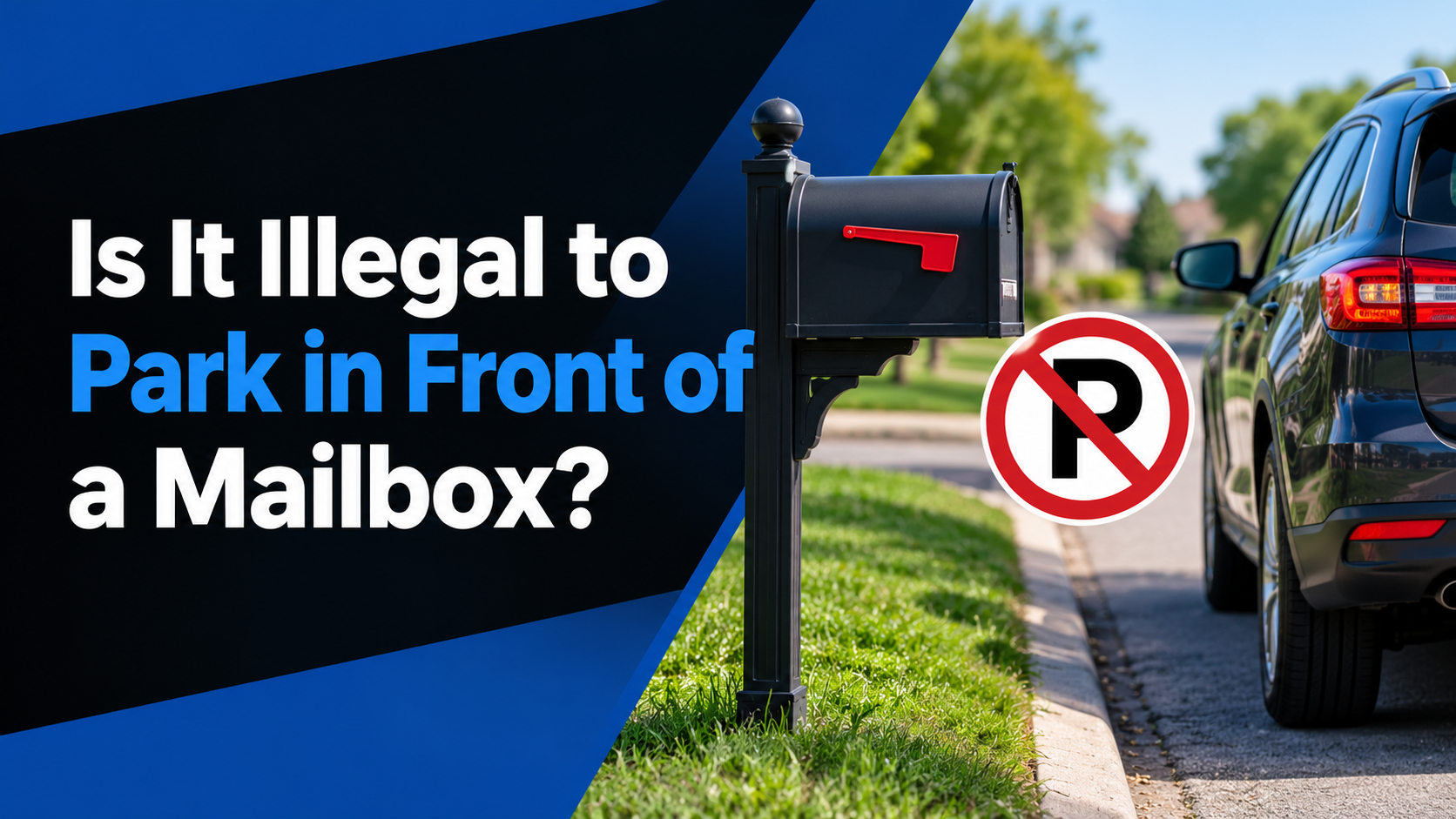
You pull up to your curb after a long day, only to find a car parked squarely in front of your mailbox. Or maybe you are the driver hunting for a spot and that open space looks perfect. Either way, the question hits hard: is it illegal to park in front of a mailbox? For homeowners, renters, delivery drivers, and anyone navigating suburban streets, the answer affects mail delivery, neighbor relations, and possible tickets or towing. This guide breaks down United States Postal Service policies, federal rules on mail obstruction, local parking ordinances, practical distances, and steps to resolve problems without drama. You will learn how to keep mail flowing, avoid penalties, and handle disputes the right way.
What the United States Postal Service Requires for Mailbox Access
The United States Postal Service prioritizes efficient, safe delivery. Carriers on curbside routes typically stay in their vehicles. They pull up, reach the box, drop the mail, and move on. Anything that forces them out of the vehicle or requires awkward maneuvering slows the route and raises safety concerns for letter carrier safety.
USPS policy places responsibility on the customer. You must keep the approach to your mailbox clear of vehicles, trash cans, snow, ice, overgrown plants, and other obstacles. Official guidance from the Postal Operations Manual states that the customer is responsible for keeping the approach clear to facilitate delivery. When a vehicle temporarily blocks the box during normal delivery hours, the carrier normally dismounts and delivers on foot if it is safe to do so. The key word is “temporary.”
If the same box stays blocked repeatedly, and the resident can control the parking (for example, by talking to a household member or visitor), the situation changes. After proper notification, the postmaster may withdraw delivery service with district manager approval. That means no mail until the problem is fixed. USPS has confirmed this approach in public statements and FAQ materials: carriers will try to deliver, but continual problems can lead to suspension.
There is no national USPS rule that names a specific number of feet. Online claims about a strict “30-foot rule” or “15 feet on each side” usually come from local ordinances or informal advice, not from federal postal regulations. The functional standard is simple: the carrier’s vehicle must be able to approach, reach the box, and leave safely without excessive backing or risk.
Mailbox placement itself follows clear standards that support access. The bottom of a curbside box should sit 41 to 45 inches above the road surface. The front of the box should sit 6 to 8 inches back from the curb face or road edge. These measurements let the carrier reach the door from the vehicle window. A poorly placed box makes any nearby parking more disruptive.
Letter carrier safety matters. Stepping into traffic, leaning across a vehicle, or navigating ice creates real hazards. Keeping the approach clear protects the people who bring your mail and packages every day.
Federal Law on Mail Delivery Interruption
Federal criminal law does not create a specific parking ticket for blocking a mailbox. What it does create is a prohibition on intentional interference. Under 18 U.S.C. § 1701, whoever knowingly and willfully obstructs or retards the passage of the mail, or any carrier or vehicle carrying the mail, faces a fine and up to six months in prison, or both.
The critical phrases are “knowingly and willfully.” A one-time accidental park in a tight neighborhood spot almost never meets that standard. A neighbor who parks in the same place every day after being told it blocks delivery, or someone who does it to stop another person from receiving mail, stands on much thinner ice. Prosecutors rarely pursue casual parking cases under this statute, but the law exists and postal inspectors can investigate deliberate obstruction.
This federal rule sits alongside USPS operational policies. Together they give the Postal Service tools to protect mail flow without turning every blocked box into a federal case. Most real-world consequences stay at the local level or within USPS administrative action (skipped delivery or suspended service).
Local Parking Ordinances and Traffic Code Enforcement
Because federal law and USPS rules do not create a uniform parking ban, local governments fill the gap. Cities, towns, and counties write their own parking codes. Some explicitly prohibit parking near mailboxes. Others rely on broader rules against obstructing traffic, blocking access, or creating hazards.
Examples of variation:
- Some municipalities ban parking within 5 to 10 feet of a mailbox during delivery hours (often roughly 7 a.m. to 7 p.m. or similar windows).
- Others set 15 feet on each side.
- A few require more clearance or apply the rule only to cluster boxes that serve multiple homes.
- Many places have no specific mailbox rule at all. Enforcement then depends on general obstruction or traffic-flow provisions.
Fines typically range from about $25 to $150 for a first offense, with higher amounts or escalating penalties for repeats. Towing is less common for a single incident but becomes more likely after multiple tickets or when the vehicle remains for an extended period. Enforcement is usually complaint-driven. Police or parking officers respond when a resident or carrier reports a problem.
Local parking ordinances can change. What was legal last year may carry a ticket this year if the city council responded to postal complaints. Always check your city or county municipal code (usually searchable online under parking or traffic regulations) or call the non-emergency police line for clarification. HOA rules can add another layer on private streets, though enforcement power varies.
The result is a patchwork. Parking that draws a ticket in one suburb may go unnoticed in the next town. Drivers who travel between areas should treat every curbside mailbox as needing clear access.
How Close Can You Park to a Mailbox?
People often ask for a single number: how many feet can you park near a mailbox? There is no universal federal answer. USPS focuses on functional access rather than a measured setback. Local codes supply the numbers when they exist.
Practical guidance that works almost everywhere:
- Leave enough room for a mail truck to pull parallel to the box, open the door, and pull away without backing into traffic.
- Aim for clear space roughly the length of a standard vehicle on the approach and exit sides when possible.
- Never park so the vehicle sits directly in front of the box face during expected delivery windows.
If your city code states a distance (for example, 10 feet or 15 feet), follow that number. When no specific distance appears, use common sense and courtesy. A car parked so close that the carrier cannot reach the box without leaving the vehicle creates the exact problem USPS wants to avoid.
Cluster or community mailboxes often receive stricter local protection because they serve many addresses. Parking that blocks an entire bank of boxes can interrupt service for an entire street.
Consequences of Blocking a Mailbox
Consequences fall into three categories: mail service, local enforcement, and rare federal exposure.
Mail delivery interruption is the most common and immediate result. The carrier may skip the stop that day. Repeated skips can lead to formal notice and eventual withdrawal of delivery until the obstruction is removed. Important items (medications, checks, legal notices, packages) can be delayed. Once service is withdrawn, restoring it requires fixing the problem and sometimes additional steps with the local post office.
Parking violation tickets come from local authorities. Fines vary, but they add up. Repeat offenses can bring higher fines or towing at the owner’s expense. Storage fees after a tow often exceed the original ticket.
Federal exposure remains uncommon for ordinary parking. Only knowing, willful obstruction triggers 18 U.S.C. § 1701. Still, the existence of the statute underscores that mail delivery is protected activity.
Neighbor disputes can escalate independently of formal penalties. Blocked mailboxes strain relationships and sometimes lead to police involvement even when no specific ordinance is violated.
What to Do If Someone Is Blocking Your Mailbox
Start with the simplest steps.
Talk to the vehicle owner if you know who it is. A polite conversation (“The carrier can’t reach my box when the car sits there”) solves many cases. Some people simply do not realize the impact.
Document the problem. Note dates, times, license plate, and photos that show the vehicle relative to the mailbox. This record helps if you need to involve the post office or local enforcement.
Contact your local post office. Explain the repeated blockage. Carriers and postmasters track problem addresses. They can leave formal notices and, if needed, begin the process for service withdrawal after proper steps.
Call local parking enforcement or the non-emergency police line if a specific ordinance applies or if the vehicle has been there an unusually long time. Provide the documentation. On public streets, officers can issue tickets when the code supports it. Private streets or HOA-controlled roads may require a different path (HOA management or civil remedies).
Avoid confrontational tactics such as blocking the other vehicle in return or placing notes that could be seen as harassment. Stay factual and focused on mail access.
If the problem is your own household vehicle, treat it the same way. USPS does not distinguish between your car and a stranger’s car when the box is blocked.
Special Situations: Sundays, Holidays, and Your Own Mailbox
Is it illegal to park in front of a mailbox on Sunday? Regular letter mail often does not arrive on Sundays, but package delivery does in many areas. Local parking ordinances may still apply regardless of the day. The safest practice is to keep the approach clear every day. A parked car on Sunday can still force a package carrier to dismount or skip the stop.
The same logic applies to holidays and early mornings before delivery windows open. Overnight parking that remains into delivery hours creates the problem.
Can you park in front of your own mailbox? Technically, the access rules still apply. Blocking your own box can result in skipped delivery just as easily as a neighbor’s car. If you must leave a vehicle there temporarily, consider holding mail through usps.com or arranging an alternate delivery method with your local office.
Delivery drivers and visitors should treat every mailbox as requiring clearance. A quick stop for package drop-off is different from leaving a vehicle for hours.
Practical Tips for Homeowners and Drivers
For residents:
- Keep vegetation trimmed and the path clear year-round.
- Educate household members and frequent visitors about the need for access.
- Install a clear address number on the box so carriers can identify it quickly.
- In snowy climates, clear a path to the box; accumulated snow is treated as an obstruction.
For drivers seeking parking:
- Look for spaces that leave the mailbox approach open.
- When in doubt, choose a spot farther from the box rather than closer.
- Respect any curb markings or signs that protect cluster boxes.
For neighborhoods with chronic problems, consider requesting the city review parking rules or install temporary signs during peak complaint periods. Some communities have successfully worked with local postmasters and councils to create clearer standards.
Frequently Asked Questions
Is it illegal to park in front of a mailbox?
It is not banned by a single nationwide federal parking statute. USPS requires clear access, and many local ordinances make blocking a mailbox a parking violation. Federal law prohibits knowing, willful obstruction of the mail.
How close can you park to a mailbox without blocking it?
No federal distance is specified. Local codes commonly require 10 to 15 feet of clearance when they address the issue. The practical test is whether the carrier’s vehicle can pull up, reach the box, and leave safely.
Can a mailbox be blocked by a parked car?
Yes, and the result is often skipped delivery that day. Repeated blockage can lead to formal notice and possible withdrawal of service until the problem is corrected.
Who to call if someone is blocking your mailbox?
Start with a polite conversation if possible. Then contact your local post office to report the ongoing issue. If a local ordinance applies, call parking enforcement or the non-emergency police line. Document everything.
Can you get towed for parking in front of a mailbox?
Towing is possible under local rules, especially for repeated violations or extended parking, but it is less common than a ticket for a first offense. Towing fees and storage costs can be significant.
Is it illegal to park in front of a mailbox on Sunday?
Regular letter delivery is usually suspended on Sundays, but packages may still arrive. Local parking rules often apply every day. Keeping the approach clear is the safest choice.
What happens if I block my own mailbox?
The same USPS access rules apply. Your mail can be skipped or service can eventually be withdrawn if the problem continues after notice.
You May Also Like: How to Write a Law Firm Press Release That Media Outlets Will Actually Pick Up