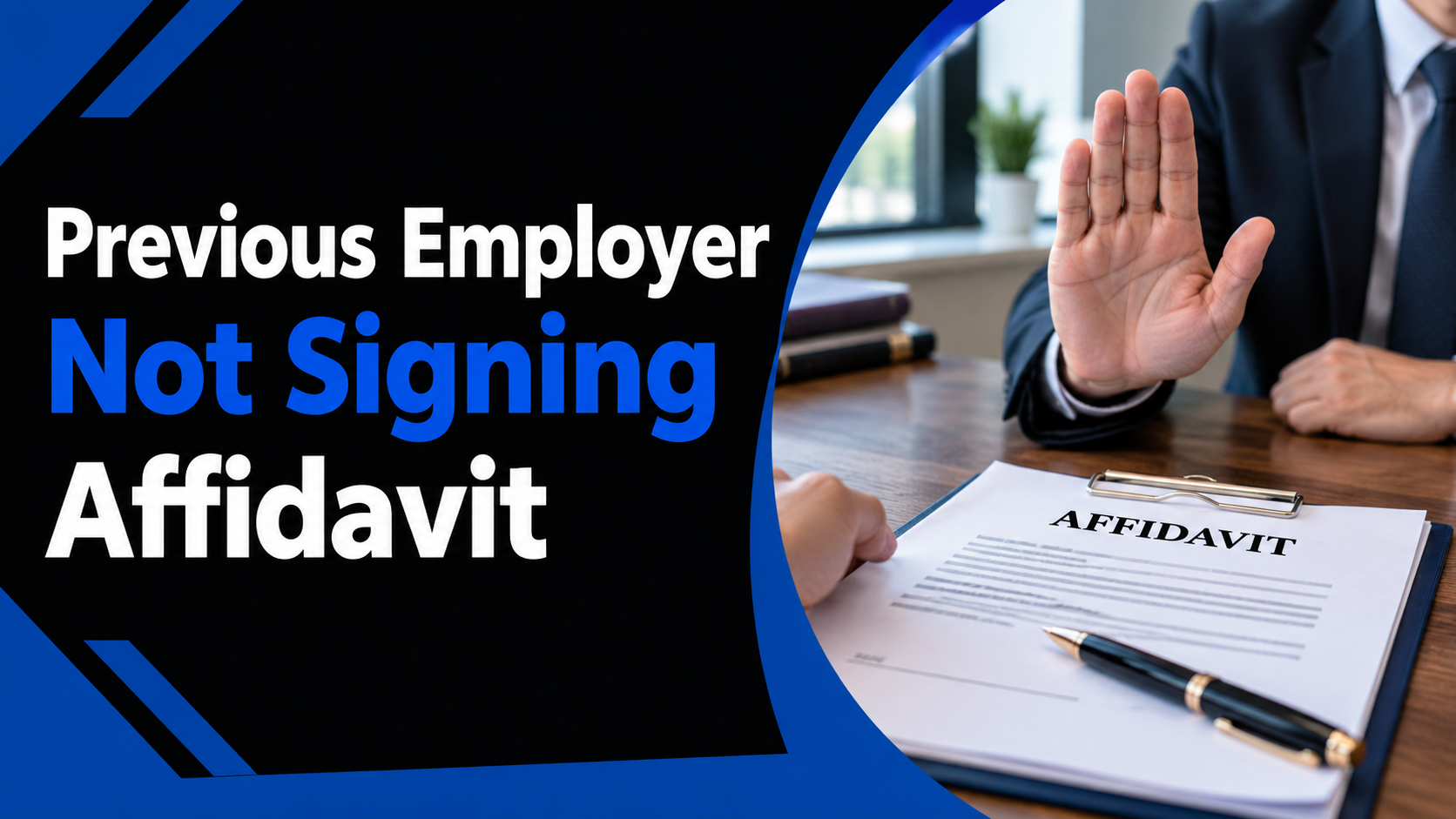
You put in the hours. You showed up early, stayed late, and learned the trade under someone else’s license. Now the licensing board needs that experience verified, and your former boss will not sign the affidavit. It feels like your career is stuck on hold through no fault of your own.
This situation hits skilled trade apprentices, electricians, plumbers, contractors, and other licensed professionals hard. State licensing boards often require a signed work experience verification or affidavit of hours before they will let you sit for the journeyman exam or issue a license. When the previous employer is non-responsive or outright refuses, the process grinds to a halt.
This guide walks you through practical, step-by-step options. You will learn non-confrontational ways to request the signature, alternative documents boards often accept (including W-2 tax forms and pay stubs), how to work with your state licensing board, and when legal pressure makes sense. Employers and HR managers will also find clear notes on their obligations and risks.
Why Employers Refuse to Sign Experience Affidavits
Most private employers are not legally required to complete detailed work experience affidavits for former employees. No federal statute forces a company to verify specific hours, job duties, or supervised experience for a licensing board.
Common reasons for refusal include company policy that limits references to dates and titles only, fear of liability if the details later prove inaccurate, a broken relationship after the employee left, the supervisor having left the company, or simple administrative overload. Some employers worry that signing could create future claims or open them to scrutiny from regulators.
In a few states, “service letter” laws require employers to provide basic employment information on request. These laws usually cover dates of employment, job title, and sometimes wages or reason for separation. They rarely force a detailed affidavit listing thousands of trade-specific hours by category (residential, commercial, troubleshooting, etc.).
If the refusal stems from discrimination or retaliation for a protected activity (such as filing a wage complaint or reporting safety issues), that can change the analysis under Title VII and similar state laws. Courts have recognized that former employees still receive protection against retaliatory references or refusals. Most refusals, however, are neutral policy decisions rather than illegal ones.
First Steps: Make a Clear, Documented Request
Start with a professional paper trail. Boards often ask whether you made a good-faith effort before they consider alternatives.
Send a formal written request by certified mail with return receipt requested, and follow up by email. Include:
- Your full name, dates of employment, job title, and employee ID if you have it.
- The exact form the board requires (attach a blank copy).
- A short summary of the hours and categories you are claiming so the signer can check company records.
- A reasonable deadline (10 to 14 business days).
- A polite note that the document is needed for state licensing and that you will accept limited verification if full detail is against policy.
Keep copies of everything. If the employer still ignores you or declines, you now have proof of the request. Some boards (for example, certain CPA and engineering pathways) explicitly instruct applicants to submit the unanswered letters with their application so the board can contact the employer itself.
If the supervisor who oversaw your work has left the company, try tracking that person down through LinkedIn, former coworkers, or union contacts. Many boards accept a signature from a former supervisor who had direct knowledge of your work, even if that person no longer works for the original employer.
Alternative Documentation Most Licensing Boards Accept
When the employer will not sign, most state electrical, plumbing, and contractor boards allow other proof of employment and experience. Contact your specific board early and ask what they will accept. Rules differ by state and trade, but the following documents appear repeatedly in board guidance and application packets.
Tax and wage records
W-2 forms, 1099s, and federal or state tax returns showing income from the employer during the claimed period are widely accepted. Many boards treat these as strong corroboration of employment dates and full-time status. You can request wage transcripts from the IRS at no cost or low cost. End-of-year pay stubs that show gross earnings and hours also help.
Pay stubs, time cards, and payroll records
Keep every pay stub you can find. Some applicants reconstruct hours from bank deposit records that match payroll dates. Union hour printouts or apprenticeship program records often carry significant weight because they are independent of the employer.
Coworker or client statements
A licensed journeyman, master, or fellow employee who worked alongside you for the full period can sometimes sign an alternative affidavit. The key requirement is firsthand knowledge of the work performed. California’s Contractors State License Board, for example, accepts certification from an employer, fellow employee, journeyman, union representative, contractor, or business associate with direct knowledge. NCEES (for engineering and surveying) similarly allows a coworker or client when the supervisor is unavailable.
Permits, inspection reports, and project records
Building permits that list your employer or your name, final inspection reports, contracts, invoices, and work orders can document the type and volume of work. Pair these with a short personal statement describing your role on each project.
Self-employment or dissolved companies
If the company closed or you were self-employed, boards typically want Schedule C filings, client reference letters that specify dates and scope of work, and contracts. Some allow limited self-verification with a written explanation, but expect closer scrutiny and a request for extra supporting evidence.
Always check the board’s current application instructions. Submitting the wrong package wastes months. Many boards publish lists of acceptable supporting documents on their websites.
Working Directly with Your State Licensing Board
Do not wait until your application is denied. Call or email the board’s licensing staff, explain the situation, and ask two questions:
- What alternative documentation do you accept when a former employer will not sign the standard affidavit?
- Will you contact the employer on my behalf if I provide proof of my written requests?
Some boards will reach out to the non-responsive employer. Others will process the application with alternative evidence and may place the hours under additional review. A few allow a formal request for board assistance after documented follow-up attempts fail.
If the board denies credit for the hours, most provide an administrative appeal or hearing process. Deadlines are short (often 30 to 60 days). At the hearing you can present the full package of tax records, coworker statements, permits, and your written requests. Some applicants choose instead to accumulate additional qualifying hours under a cooperative employer and reapply.
For electricians, plumbers, and similar trades, look at your state’s labor department, electrical examining board, or contractors board website. Search for “experience verification,” “affidavit of work hours,” or “acceptable documentation.” Forms and guidance change, so rely on the current official version rather than older advice.
Legal Options When the Employer Still Refuses
Because private employers generally have no duty to complete detailed licensing affidavits, a pure “refusal to sign” lawsuit is rarely successful. Still, several limited avenues exist.
Wage and hour or recordkeeping complaints
Federal and state law require employers to keep accurate records of hours worked for non-exempt employees. If the employer failed to maintain or produce those records, a complaint with the Department of Labor Wage and Hour Division or the state labor agency can create pressure and sometimes produce the underlying time records you need.
Personnel file and payroll record requests
In states such as California, current and former employees have the right to inspect or receive copies of personnel records and itemized wage statements within set deadlines (often 21 or 30 days). Failure to comply can trigger statutory penalties. These records may help reconstruct hours even if the employer still will not sign a new affidavit.
Discrimination or retaliation claims
If you can show the refusal is tied to your race, sex, religion, national origin, disability, or prior protected activity (such as a wage complaint or safety report), you may have a claim under Title VII or state fair employment laws. The Supreme Court has held that Title VII protections extend to former employees in the reference context. Document any statements or selective treatment that suggest improper motive.
Demand letter from an attorney
A short, professional demand letter from a labor or employment attorney sometimes moves a stubborn employer. The letter can reference any applicable state service-letter statute, the risk of board contact, and the possibility of recordkeeping violations. It does not guarantee a signature, but it raises the cost of continued silence.
Litigation
Filing a lawsuit solely to force an affidavit signature is expensive and uncertain. Courts are reluctant to order affirmative acts that create potential liability for the employer. Focus instead on obtaining the underlying records or persuading the licensing board to accept alternatives.
Consult an employment attorney licensed in your state before spending money on formal legal action. Many offer free or low-cost initial consultations, and some trade unions provide legal assistance to members.
Practical Tips for Apprentices and Journeyman Candidates
Protect yourself from day one. Keep your own contemporaneous records: a simple notebook or digital log of daily tasks, hours, and projects. Save every pay stub, W-2, and time card. Photograph or scan permits and inspection tags that list your name or employer. Do not rely solely on the company to document your experience.
When you leave a job, request the signed affidavit while the supervisor still remembers the work and before any hard feelings solidify. Many applicants wait years and then discover the company has new ownership, the supervisor has retired, or records have been archived.
If you belong to a union, contact the hall early. Union hour reports and apprenticeship completion certificates often satisfy board requirements without an employer signature.
For out-of-state experience, expect extra scrutiny. Some boards accept verification from the original state’s licensing agency or a notarized statement from the out-of-state supervisor. Others insist on their own form plus supporting tax documents.
Guidance for Employers and HR Managers
Refusing every detailed verification request may feel safe in the short term, but it creates practical problems. Licensing boards sometimes contact the company directly. A pattern of non-cooperation can damage relationships with local inspectors, unions, and other contractors who need their own people licensed.
A middle-ground policy works well for many firms: confirm dates of employment, job title, and that the individual performed work under the company’s license, while declining to certify precise hour totals or detailed duty lists unless the company still has the records and the signer has personal knowledge. Some employers complete the form but add a note limiting the verification to information drawn from payroll records.
Train supervisors that retaliatory refusals (especially after a wage claim or complaint) can create liability. Keep accurate time records as required by the Fair Labor Standards Act and state law. When an employee leaves on good terms, offering a completed verification form is often the simplest way to close the relationship cleanly.
Common Pitfalls to Avoid
Do not submit incomplete forms or altered affidavits. Boards reject strikeouts, white-out, and unsigned pages. Do not invent hours or duties. False statements on licensing applications can lead to denial, license revocation, or even criminal charges in serious cases.
Do not wait until the last minute. Tracking down former supervisors and assembling tax records takes time. Start the process as soon as you know you will need the hours.
Do not burn bridges unnecessarily. A calm, documented request leaves the door open for a later signature or a neutral reference. Aggressive threats usually harden positions.
Finally, do not assume every board is the same. What works for the California Contractors State License Board may not satisfy the Texas State Board of Plumbing Examiners or an electrical board in Michigan. Always confirm current requirements with the agency that will issue your license.
Conclusion
A previous employer not signing an affidavit does not have to end your path to licensure. Start with a clear written request, gather W-2s, pay stubs, and other independent records, and contact your state licensing board about accepted alternatives. Coworker statements, permits, and union records often fill the gap. Legal pressure is available in limited circumstances, especially when recordkeeping failures or retaliation are involved, but most applicants succeed by working the administrative process rather than filing lawsuits.
Document everything, stay professional, and use the resources your board and trade associations provide. Your hours are real. With the right supporting package, the board can usually see that.
If your situation involves complex facts or possible retaliation, consult a qualified employment attorney in your state to evaluate the best next step.
Frequently Asked Questions
Can a former boss legally withhold a journeyman hours affidavit?
In most cases yes. Private employers generally have no federal obligation to complete detailed experience affidavits for licensing boards. Limited exceptions exist under state service-letter laws or when the refusal is discriminatory or retaliatory.
Will my state licensing board accept W-2 forms instead of an employer affidavit?
Many boards accept W-2s, tax returns, and pay stubs as supporting or alternative evidence, especially when the employer is non-responsive. Always confirm with your specific board, because policies vary by state and trade.
What if the company went out of business or the supervisor died?
Boards routinely allow coworker, client, or former supervisor verification, or self-verification with a written explanation plus supporting documents such as tax records and project files. Contact the board for the exact procedure.
How do I prove work hours if the employer refuses to sign?
Assemble W-2s, pay stubs, bank deposit records matching payroll, union hour reports, building permits, inspection records, and signed statements from coworkers who observed the work. Submit these with a letter explaining the employer’s refusal and copies of your written requests.
Can I take legal action against an employer for not signing an experience affidavit?
A standalone lawsuit to force a signature is rarely successful. Stronger options include wage-record complaints, personnel-file requests under state law, or discrimination/retaliation claims if the facts support them. An attorney demand letter sometimes produces results without litigation.
What should employers know about refusing verification requests?
Neutral policies that limit responses to dates and titles are generally lawful. Selective or retaliatory refusals can create liability. Accurate recordkeeping is required by wage-and-hour laws, and licensing boards may contact the company directly.
Is there a deadline for requesting the affidavit after leaving a job?
No universal deadline exists, but the longer you wait the harder it becomes to locate records and people. Request the form as soon as possible after separation or as soon as you know you will need the hours for licensing.
You May Also Like: What All Does an Affidavit of Support Mean? A Full Guide


One Comment on “Previous Employer Not Signing Affidavit: What Are Your Legal Options?”