Nearly 600,000 people leave U.S. prisons each year. Many of them walk out with a second chance that still carries strict conditions. Who helps them navigate that transition while protecting the public? The answer is the parole officer.
If you are exploring a criminal justice career, considering social services work, or simply trying to understand how reentry works for a family member, this guide explains what a parole officer does. You will learn the core duties, the path into the profession, typical salaries, and how these officers balance law enforcement with rehabilitation. By the end, you will have a clear picture of community supervision and its role in reducing recidivism.
What Is a Parole Officer?
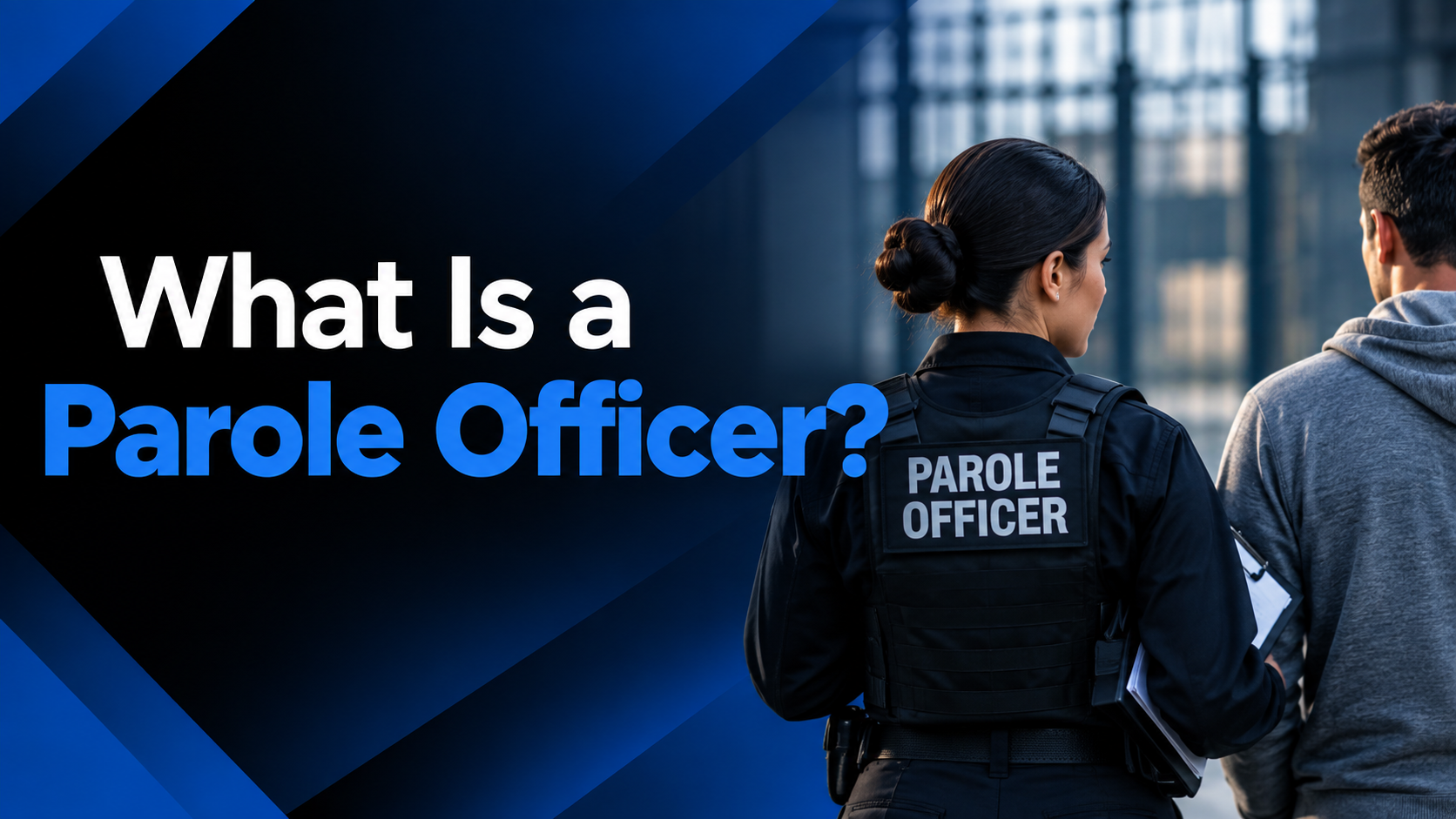
A parole officer is a criminal justice professional who supervises individuals released from prison before their full sentence ends. These individuals, called parolees, remain under the authority of the state or federal correctional system. The officer’s dual mission is to enforce the conditions of release and to support successful reintegration into the community.
Parole officers work for state parole agencies, the federal system, or local departments of corrections. They report to a parole board or similar releasing authority. Unlike police officers who respond to crimes after they occur, parole officers focus on prevention and accountability after incarceration.
The role blends elements of law enforcement and social work. Officers carry authority to conduct searches, order drug tests, and recommend revocation of parole. At the same time, they connect people with housing, employment, counseling, and treatment. This combination makes the job unique within the broader field of community supervision.
Many agencies now use the broader title “probation and parole officer” or “community supervision officer.” The core function stays the same: supervise people who have been released and help them stay crime-free.
Key Roles and Duties of a Parole Officer
The day-to-day work of a parole officer centers on three interconnected areas: monitoring compliance, supporting rehabilitation, and managing cases. Success depends on balancing accountability with genuine assistance.
Supervision and Monitoring
Officers must verify that parolees follow every condition set by the parole board. Common conditions include:
- Reporting regularly to the officer
- Maintaining employment or education
- Avoiding contact with victims or known associates
- Submitting to drug and alcohol testing
- Observing curfews or electronic monitoring rules
To enforce these rules, officers conduct scheduled and unannounced home visits, workplace checks, and office meetings. They may search residences or vehicles when authorized. They also review electronic monitoring data and coordinate with local law enforcement when violations occur.
When a violation happens, the officer investigates, documents the facts, and recommends action. That action can range from a warning or increased supervision to a return to custody. The officer often testifies at revocation hearings.
Rehabilitation and Support
Monitoring alone does not produce lasting change. Effective parole officers act as correctional treatment specialists who address the underlying issues that led to crime. They develop individualized case plans that target criminogenic needs such as substance abuse, mental health challenges, lack of job skills, or unstable housing.
Typical support activities include:
- Referring parolees to substance abuse treatment or counseling
- Helping with job applications, resume writing, and interview preparation
- Connecting people to transitional housing or family reunification programs
- Encouraging enrollment in education or vocational training
- Providing crisis intervention during moments of high stress
Research consistently shows that combining supervision with treatment produces better results than pure surveillance. Officers who focus on problem-solving and relationship-building help lower the chances that a person returns to prison.
Case Management and Reporting
Every parolee represents a file that must stay accurate and current. Officers maintain detailed case notes, risk assessments, and progress reports. These documents go to supervisors, the parole board, and sometimes the courts.
Caseload size varies widely. The American Probation and Parole Association recommends standards based on risk level: roughly 20 cases for intensive supervision, 50 for moderate-to-high risk, and up to 200 for low-risk individuals. In practice, many officers manage 60 to 100 cases or more, which requires strong organizational skills and prioritization.
Officers also collaborate with treatment providers, employers, family members, and other agencies. Clear communication across these partners is essential for coordinated care.
Daily Routine of a Parole Officer
No two days look identical, but a typical schedule mixes office work with fieldwork.
A morning might begin with reviewing overnight alerts from electronic monitoring systems or checking messages from parolees. The officer then prepares for home visits or office appointments. Fieldwork often takes up several hours. Officers drive through neighborhoods, verify living conditions, speak with family members, and conduct random drug tests.
Afternoons frequently involve writing reports, updating risk assessments, and coordinating services. Some days include court or parole board hearings where the officer presents evidence or recommendations. Evenings or weekends can bring emergency calls if a parolee faces a crisis or commits a new offense.
The work is mobile and unpredictable. Officers must stay flexible while managing paperwork deadlines and safety protocols. Many carry firearms or defensive tools and receive ongoing training in defensive tactics and crisis response.
Difference Between Parole Officer and Probation Officer
People often use the terms interchangeably, yet the distinction matters.
A probation officer supervises individuals sentenced to probation instead of (or in addition to) prison. Probation is a court-ordered alternative to incarceration. The person usually has not served a full prison term.
A parole officer supervises people who have already been incarcerated and are released early under conditions. Parole is granted by a parole board or through statutory guidelines after a portion of the sentence has been served in custody.
In many jurisdictions the same staff handle both caseloads, and the skill sets overlap heavily. Both roles require monitoring, case planning, and resource coordination. The key difference lies in the legal status of the person under supervision and the stage of the justice process.
Understanding this difference helps job seekers choose the right training path and helps families know which agency to contact.
How to Become a Parole Officer
The path is structured and competitive. Most positions are with state or federal government agencies.
Education Requirements
A bachelor’s degree is the standard minimum requirement in nearly every jurisdiction. Preferred majors include criminal justice, social work, psychology, sociology, or a related behavioral science field. Coursework in criminology, counseling, substance abuse, and case management strengthens an application.
Some states accept a combination of education and relevant experience. Federal positions and specialized roles often prefer or require graduate coursework.
Training and Certification
After hiring, new officers complete a state or agency-sponsored training academy. Programs typically last several weeks to several months and cover legal authority, report writing, firearms, defensive tactics, risk assessment tools, and evidence-based practices. Many agencies require successful completion of a probationary period that includes supervised fieldwork.
Background checks, drug screening, psychological evaluations, and physical fitness tests are standard. A valid driver’s license is almost always required, and most agencies set a minimum age of 21.
Skills Needed to Be a Parole Officer
Success demands a specific mix of abilities:
- Strong verbal and written communication
- Empathy balanced with firmness
- Critical thinking and sound judgment under pressure
- Organization and time management for heavy caseload management
- Cultural competence and the ability to work with diverse populations
- Conflict resolution and de-escalation skills
- Basic computer proficiency for case management systems
Officers who combine genuine care for rehabilitation with clear boundaries tend to achieve the best outcomes for both public safety and the people they supervise.
Salary of a Parole Officer and Job Outlook
According to the U.S. Bureau of Labor Statistics, the median annual wage for probation officers and correctional treatment specialists (the category that includes most parole officers) was $66,270 in May 2025. The lowest 10 percent earned less than about $46,840, while the highest 10 percent earned more than $107,790.
Pay varies significantly by location, experience, and agency. States with higher costs of living and stronger public-employee compensation systems generally offer higher salaries. Federal positions and specialized caseloads (mental health, sex offender, or intensive supervision) often pay more.
Job growth is projected at about 3 percent from 2025 to 2035, roughly as fast as the average for all occupations. Openings will continue to arise from retirements and normal turnover. Demand remains steady because community supervision is a core component of modern corrections policy that prioritizes recidivism reduction over pure incarceration.
Challenges of Being a Parole Officer
The work is meaningful, yet it carries real difficulties.
High caseloads limit the time available for meaningful engagement with each person. Officers often face competing demands: public safety expectations, bureaucratic paperwork, and the personal crises of the people they supervise. Exposure to trauma, potential violence during field contacts, and the emotional weight of seeing people struggle or fail can lead to burnout.
Secondary trauma and compassion fatigue are common occupational hazards. Agencies increasingly offer wellness programs, peer support, and training in resilience. Officers who maintain strong professional boundaries and seek regular supervision tend to sustain longer, healthier careers.
Despite the challenges, many officers describe deep satisfaction when a parolee secures stable housing, completes treatment, reunites with family, or simply stays free of new arrests.
The Impact on Offender Rehabilitation and Community Safety
Parole officers sit at a critical intersection of public safety and second chances. Effective community supervision reduces the likelihood that people return to prison. Studies show that supervised release, when paired with treatment and support, produces lower reoffending rates than unsupervised release.
By focusing resources on higher-risk individuals, connecting people to evidence-based programs, and responding proportionately to violations, officers help break cycles of crime. Their work also saves taxpayer dollars by reducing the need for expensive prison beds while giving people a structured opportunity to rebuild productive lives.
For families of justice-involved individuals, understanding the role of the parole officer can reduce fear and improve cooperation. Clear communication between the officer, the parolee, and supportive family members often makes the difference between success and failure.
Conclusion
A parole officer is far more than a monitor. These professionals enforce conditions of release, guide offender rehabilitation, manage complex caseloads, and contribute directly to safer communities. The career demands education, specialized training, emotional resilience, and a genuine commitment to both accountability and hope.
Whether you are a student considering a criminal justice career, a job seeker weighing options in law enforcement or social services, or someone navigating the parole process for a loved one, understanding this role brings clarity. The path is rigorous, the daily work is demanding, and the potential impact is profound.
If this career interests you, research your state’s specific hiring requirements, consider relevant internships or volunteer experience, and begin building the skills that successful officers use every day. Public safety and successful reentry both depend on dedicated professionals who show up ready to do the hard, necessary work of community supervision.
Frequently Asked Questions
What is a parole officer’s main responsibility?
The primary duty is to supervise individuals released from prison on parole, ensure they follow release conditions, and help them access resources that support successful reintegration while protecting public safety.
How is a parole officer different from a probation officer?
Parole officers supervise people released early from prison. Probation officers supervise people sentenced to community supervision instead of (or after limited) incarceration. Duties overlap, but the legal status of the supervised person differs.
What education do you need to become a parole officer?
Most agencies require a bachelor’s degree in criminal justice, social work, psychology, or a related field, followed by agency-specific training and certification.
What is the average salary of a parole officer?
The median annual wage for the broader category that includes parole officers was $66,270 as of May 2025, according to the Bureau of Labor Statistics. Actual pay depends on location, experience, and employer.
What does a typical day look like for a parole officer?
Days usually combine office work (reports, case planning, coordination) with fieldwork (home visits, employment checks, drug testing) and occasional court or board hearings. Schedules are often unpredictable.
What skills are most important for success?
Strong communication, sound judgment, empathy paired with firmness, organizational ability, and the capacity to manage stress and potential safety risks are essential.
Do parole officers carry weapons?
Many do. Requirements and policies vary by agency. Most receive firearms training and defensive tactics instruction as part of their academy preparation.
You May Also Like: Writing a Letter to Parole Officer for a Client? Clinical vs. Legal Best Practices